As a supplier of operable partitions, I’ve witnessed firsthand the transformative power these partitions bring to various spaces. In this blog, I’ll delve into the concept of the accessibility of operable partitions, exploring what it means, its importance, and how it impacts different settings. Operable Partitions
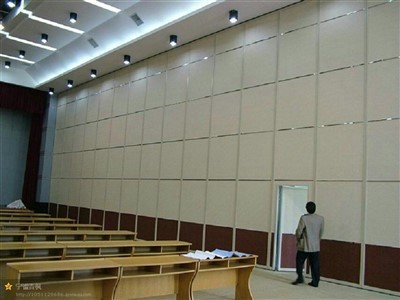
Understanding the Accessibility of Operable Partitions
Accessibility, in the context of operable partitions, refers to the ease with which these partitions can be used, adjusted, and integrated into a given environment. It encompasses several key aspects:
Physical Accessibility
Physically, operable partitions need to be easy to move, open, and close. This involves considerations such as the weight of the partition panels, the smoothness of the track system, and the force required to operate the partitions. For instance, in a corporate office setting where meeting rooms are frequently reconfigured, employees should be able to effortlessly slide the partitions into place without excessive physical exertion. Modern operable partitions are designed with advanced track systems and lightweight materials to ensure smooth and easy operation.
Functional Accessibility
Functionally, operable partitions should offer a range of features that enhance their usability. This includes options for different types of locking mechanisms, such as magnetic locks or key locks, to ensure privacy when needed. Additionally, partitions may have built – in soundproofing capabilities, allowing for quiet and private meetings. For example, in a school auditorium, operable partitions can be used to divide the space into smaller classrooms. The partitions should be able to effectively block out noise from adjacent areas, providing a conducive learning environment.
Technological Accessibility
In today’s digital age, technological accessibility is becoming increasingly important. Many operable partitions now come with smart features, such as remote control operation, integration with building management systems, and sensors that detect occupancy. These technological advancements make it easier for users to control the partitions from a distance, adjust settings based on the needs of the space, and improve overall energy efficiency. For instance, in a large convention center, event organizers can use a centralized control system to quickly reconfigure the space using operable partitions, saving time and effort.
Importance of Accessibility in Operable Partitions
Enhancing User Experience
Accessible operable partitions significantly improve the user experience. When partitions are easy to use, occupants of a space can quickly adapt the environment to their needs. This is particularly important in dynamic settings such as co – working spaces, where users may need to create private work areas or open up large collaborative spaces on demand. By providing a seamless user experience, operable partitions contribute to increased productivity and satisfaction among users.
Meeting Regulatory Requirements
In many regions, there are strict regulations regarding accessibility in buildings. Operable partitions need to comply with these regulations to ensure that all individuals, including those with disabilities, can access and use the space. For example, partitions should have clear pathways for wheelchair users, and control mechanisms should be within reach and easy to operate. By meeting these regulatory requirements, businesses can avoid legal issues and create an inclusive environment for all.
Flexibility and Adaptability
The accessibility of operable partitions allows for greater flexibility and adaptability in a space. As the needs of a building change over time, the partitions can be easily reconfigured to accommodate new functions. This is especially valuable in commercial buildings, where businesses may need to expand, contract, or re – organize their space. For example, a retail store may use operable partitions to create different display areas during seasonal sales or special events.
Accessibility in Different Settings
Office Spaces
In office environments, operable partitions are used to create flexible workspaces. They can be used to divide large open – plan offices into private offices, meeting rooms, or collaborative areas. The accessibility of these partitions is crucial for employees to quickly adjust the space according to their work requirements. For example, a team may need to quickly convert a large open area into a private meeting room for a client presentation. The partitions should be easy to move and lock in place, allowing for a seamless transition.
Educational Institutions
In schools and universities, operable partitions are used to optimize the use of space. They can be used to divide large classrooms into smaller study areas or to create multi – purpose spaces. Accessibility is important for both students and teachers. For example, teachers should be able to easily move the partitions to create different teaching environments, and students should be able to access all areas of the space without any barriers.
Healthcare Facilities
In healthcare settings, operable partitions are used to create private patient rooms, examination areas, and isolation units. The accessibility of these partitions is essential for healthcare providers to quickly and efficiently care for patients. For example, in an emergency room, partitions need to be easily movable to create additional treatment areas during peak times.
Factors Affecting the Accessibility of Operable Partitions
Design and Construction
The design and construction of operable partitions play a crucial role in their accessibility. High – quality materials, well – engineered track systems, and ergonomic control mechanisms are essential for easy operation. For example, partitions with smooth – rolling wheels and low – friction tracks are easier to move than those with rough or sticky tracks.
Maintenance and Upkeep
Regular maintenance is necessary to ensure the continued accessibility of operable partitions. This includes cleaning the tracks, lubricating moving parts, and checking for any signs of wear and tear. A well – maintained partition system will operate smoothly and reliably, reducing the risk of breakdowns and ensuring long – term accessibility.
Training and Education
Proper training and education for users are also important for ensuring the accessibility of operable partitions. Users should be familiar with how to operate the partitions safely and effectively. This can be achieved through on – site training sessions or user manuals. For example, in a large office building, new employees should receive training on how to use the operable partitions in the meeting rooms.
Conclusion

The accessibility of operable partitions is a multi – faceted concept that encompasses physical, functional, and technological aspects. It is of utmost importance in various settings, from offices and educational institutions to healthcare facilities. By ensuring that operable partitions are accessible, we can enhance the user experience, meet regulatory requirements, and provide flexible and adaptable spaces.
Folding Operable Partitions If you’re interested in exploring the benefits of operable partitions for your space, I encourage you to reach out to us. Our team of experts can provide you with detailed information, product demonstrations, and customized solutions to meet your specific needs. Whether you’re looking to create a flexible office environment, optimize a school space, or enhance a healthcare facility, we have the expertise and products to help you achieve your goals.
References
- "Building Accessibility Standards: A Comprehensive Guide", National Building Code Institute
- "The Impact of Flexible Space Design on Productivity", Journal of Workplace Design
- "Operable Partition Systems: Technology and Applications", International Journal of Interior Design
Dasheng Partition Building Materials Co., Ltd.
As one of the most professional operable partitions manufacturers and suppliers in China, we’re featured by quality products and good service. Please rest assured to buy customized operable partitions at competitive price from our factory.
Address: No. 41, West Line East Road, Shizigang Industrial Zone, Dashi Community, Lishui Town, Nanhai District, Foshan City, Guangdong Province, P.R. China
E-mail: dsmobilewall@gmail.com
WebSite: https://www.movablewall.net/
