Hey there! I’m a supplier of Precision Centerless Grinders, and I often get asked about the training requirements for operating these machines. So, I thought I’d share some insights on what it takes to operate a Precision Centerless Grinder effectively. Precision Centerless Grinder

First off, let’s talk about why training is so important. Precision Centerless Grinders are high – tech machines designed to achieve extremely accurate grinding results. Without proper training, operators might not only fail to get the desired precision but also risk damaging the equipment or even causing safety issues.
Basic Knowledge Requirements
To start with, an operator should have a good understanding of basic machining principles. This includes knowledge of materials, how different metals and alloys react to grinding, and the properties that affect the grinding process. For example, some materials are harder and require different grinding wheels and feed rates compared to softer materials.
Math skills are also crucial. Operators need to be able to read and interpret technical drawings, which often involve measurements in millimeters or inches. They should be able to calculate things like grinding depths, feed rates, and spindle speeds based on the specifications of the job. Simple arithmetic operations such as addition, subtraction, multiplication, and division are used on a daily basis.
Knowledge of safety procedures is a must – have. Precision Centerless Grinders have moving parts, high – speed spindles, and sharp grinding wheels. Operators should know how to use personal protective equipment (PPE) like safety glasses, gloves, and ear protection. They also need to understand how to prevent common hazards such as entanglement, flying debris, and electrical shock. For instance, they should know to keep their hands away from the grinding area while the machine is running and to properly ground the equipment to avoid electrical issues.
Hands – on Machine Training
Once the operator has the basic knowledge, hands – on training on the Precision Centerless Grinder itself is essential. This training usually starts with an overview of the machine’s components. The operator needs to learn about the grinding wheel, regulating wheel, work rest blade, and how they all work together.
The grinding wheel is the key component that does the actual cutting. Operators should learn how to select the right type of grinding wheel based on the material being ground, the required surface finish, and the grinding operation. They also need to know how to dress the grinding wheel to maintain its sharpness and correct shape. Dressing involves using a diamond dresser to remove the dulled abrasive grains from the wheel surface.
The regulating wheel controls the speed and direction of the workpiece. Operators have to learn how to adjust the regulating wheel to achieve the desired feed rate and rotation speed of the workpiece. This is a delicate balance, as the wrong settings can lead to poor surface finish or inaccurate dimensions.
The work rest blade supports the workpiece during grinding. It needs to be properly adjusted and aligned to ensure that the workpiece is stable and that the grinding process is accurate. Operators should learn how to position the work rest blade at the correct height and angle for different types of workpieces.
Programming and Setup Training
In modern Precision Centerless Grinders, programming is often involved. Operators need to be trained in the machine’s control system. This could be a simple numerical control (NC) system or a more advanced computer numerical control (CNC) system.
With an NC system, operators need to learn how to input basic commands for things like spindle speed, feed rate, and grinding depth. They have to understand the code and how it translates into the machine’s movements. For example, a specific code might tell the machine to increase the feed rate by a certain amount.
CNC systems are more complex. Operators need to learn a programming language specific to the machine, such as G – code. They have to be able to create programs from scratch or modify existing ones based on the job requirements. This involves understanding concepts like coordinate systems, tool paths, and sub – programs.
Setup training is also a big part of the process. Operators need to know how to load the workpiece onto the machine correctly. They have to ensure that the workpiece is properly centered and clamped to prevent it from moving during grinding. They also need to set up the grinding parameters, such as the grinding wheel speed, regulating wheel speed, and the in – feed and through – feed rates.
Quality Control Training
Quality control is an integral part of operating a Precision Centerless Grinder. Operators should be trained in using measurement tools such as micrometers, calipers, and gauges to check the dimensions of the machined workpiece. They need to know how to take accurate measurements at different points of the workpiece and compare them to the specified tolerances.
If the workpiece is out of tolerance, the operator should know how to make adjustments to the machine settings to correct the problem. This might involve changing the grinding parameters, dressing the grinding wheel, or re – positioning the workpiece.
Training also includes understanding the importance of maintaining a clean and organized work environment. Dust and debris from the grinding process can affect the accuracy of the measurements and the performance of the machine. Operators should be trained to regularly clean the machine, the measurement tools, and the work area.
Ongoing Training and Refresher Courses
The world of machining is constantly evolving, and new technologies and techniques are being developed all the time. That’s why ongoing training and refresher courses are important for operators of Precision Centerless Grinders.
Manufacturers often release software updates for their CNC machines, which can improve performance and add new features. Operators need to be trained on how to install and use these updates. Additionally, new grinding wheels and materials are constantly being introduced to the market. Operators should learn about these new products and how they can be used to improve the grinding process.
Refresher courses are also a good idea to keep operators up – to – date on safety procedures and best practices. As time goes by, operators might forget some of the important safety rules or start to develop bad habits. A refresher course can help remind them of the proper way to operate the machine and keep themselves safe.
Conclusion
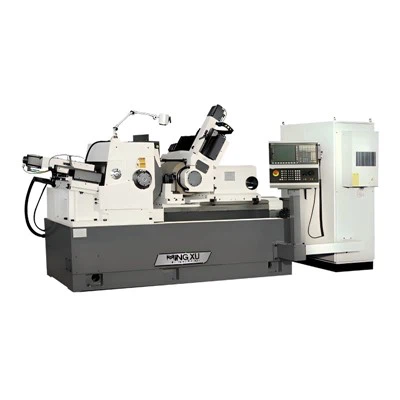
So, there you have it – the training requirements for operating a Precision Centerless Grinder. From basic knowledge of machining principles to hands – on machine training, programming, quality control, and ongoing learning, it’s a comprehensive process.
Hydraulic Surface Grinder If you’re in the market for a Precision Centerless Grinder or want to know more about our training programs for our machines, we’d love to hear from you. Whether you’re a small – scale workshop or a large manufacturing plant, we can provide the right equipment and support for your needs. Reach out to us to start a conversation about how we can help you take your grinding operations to the next level.
References
- "Machining Handbook" by various industry experts.
- Manufacturer’s manuals for Precision Centerless Grinders.
- Industry training materials provided by professional machining associations.
Wuxi Mingxu Machinery Equipment Co., Ltd.
As one of the most professional precision centerless grinder manufacturers and suppliers in China, we’re featured by quality products and good price. Please rest assured to buy the best precision centerless grinder for sale here from our factory. Also, custom service is available.
Address: No. 5-5 Jinke Wealth Plaza, Changjiang North Road, Xinwu District, Wuxi City, Jiangsu Province
E-mail: yingyingmxjd@163.com
WebSite: https://www.mingxu-china.com/
