When I first started out in the annealing furnace supply business—over a decade ago, back when I was just fielding late-night calls from heat treaters frustrated with inconsistent metal hardness—one question kept popping up: “Why does my neighbor get more uniform results out of their furnace, even when they’re using the same alloy and holding time?” I’d dig into the specs, check their temperature logbooks, and half the time, the answer wasn’t the burner setup or the control system. It was the shape of the annealing furnace. Annealing Furnace
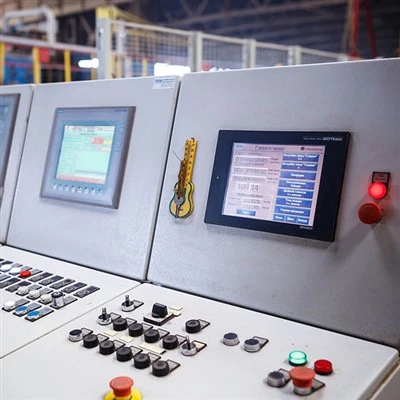
That realization shifted how I build and sell equipment. I still get pushback sometimes—heat treaters will say, “A furnace is a furnace, right? It heats metal. What difference does the shape make?” But after walking shop floors across three continents, testing prototypes in our own lab, and seeing the data from thousands of successful runs, it’s become clear: furnace shape isn’t just a design detail. It’s a core driver of annealing outcomes, and cutting corners here costs you in scrap, throughput, and part quality.
Let’s start with the basics. Annealing isn’t just turning up heat. It’s a precise sequence: heating metal to a specific temperature, holding it long enough for internal grains to reorient and eliminate stress, then cooling slowly to lock in that soft, ductile microstructure. For that sequence to work evenly across every part, the furnace’s internal atmosphere, heat distribution, and the path a part takes through the chamber all have to align. That’s where shape comes in.
Take cylindrical batch furnaces, for example. These are the old workhorses—tall, round chambers that load parts on cars rolling through the center. For small, uniform loads like fasteners or thin wire coils, cylinders have a big plus: the hot air circulates naturally around the curved walls, so as long as the fan is sized right, heat moves evenly toward the center. But here’s the catch I’ve seen trip up even veteran operators: the vertical cylinder’s center column is a dead zone. When you load heavy racks of steel shafts or aluminum ingots, the parts stacked in the middle never get the same heat exposure as the ones near the wall. We had one client in Detroit lose $120,000 in scrap in six months because their cylindrical furnace’s center load was coming out 40 degrees cooler than the edge. By the time they realized it, they’d been rejecting 18% of their parts weekly, all because they thought a round shape meant uniform heat.
Now compare that to rectangular box furnaces, the workhorses we design for medium to large loads. The flat, parallel walls let you arrange parts in rows, spaced evenly from top to bottom, left to right. The heat radiates straight across the chamber, so there’s no central dead space—provided you place your burners and air circulation baffles correctly. A client in Mexico City switched from a cylindrical furnace to a rectangular box shape three years ago, and their scrap rate for cold-rolled steel sheets dropped from 7.2% to 1.9% within two months. Why? They could align each sheet to within two inches of the chamber’s centerline, so every part got the same heat soak. The only time a rectangular shape struggles is with very long parts—like 40-foot steel beams—where the flat chamber’s corners can get trapped with stagnant air, leading to uneven cooling at the ends. That’s when we start talking about custom elongated box designs, tailored to the exact length of the parts they run.
Then there are continuous annealing furnaces, the workhorses for high-volume production like auto body panels or copper wire. These aren’t batch-style chambers—they’re long, tunnel-like shapes where parts move through on conveyor belts, one after another. The tunnel shape solves a huge problem for continuous processing: it lets you segment the annealing zone. You can have a pre-heat section at one end, a precise holding zone in the middle, and a slow-cool section at the far end, all in one linear run. A big auto parts manufacturer in Ohio told us before they switched to a tunnel-shaped continuous furnace, their line would shut down three times a week because batch furnaces couldn’t keep up with demand. Now their throughput is 2.5 million parts a month, and their tensile strength variability is down 12%. The tunnel’s length lets each part spend exactly the right time in each stage—too short, and the grains don’t reorient; too long, and you soften the metal more than needed. Without that linear shape, they couldn’t adjust the hold time independently of the speed, which is non-negotiable for consistent production.
Wait, what about atmosphere, a key part of annealing that most shop owners overlook when talking shape? For stainless steel or copper, you need an inert atmosphere—nitrogen, argon, or even endothermic gas—to prevent oxidation during heating. The shape of the chamber dictates how well that atmosphere circulates. Cylindrical furnaces, with their rounded walls, let the atmosphere swirl around parts easily, but if the load is dense, the gas can’t penetrate between racks. Rectangular furnaces, with their flat surfaces, let you mount fans along the ceiling that push the atmosphere straight down into the load. We did a test last year with a stainless steel 304 load: in a cylindrical furnace, 7% of the parts had surface discoloration from oxidation; in a rectangular furnace with top-mounted atmosphere circulators, that dropped to 0.8%. The rectangular shape gave us more space to place baffles that direct gas between every rack, which you can’t do as effectively in a round chamber.
Cooling, the final and often most overlooked step, also hinges on shape. If your furnace is designed for gas quenching or forced-air cooling, the chamber’s shape controls how evenly the cooling medium hits the part. Cylindrical furnaces often have conical cooling zones at the bottom, which can create eddies that slow cooling in the center. Rectangular furnaces with wide, flat cooling bays have uniform air flow across the entire load. For a client making aluminum die-cast parts, we swapped their old cylindrical furnace’s conical cooling section for a rectangular cooling chamber, and their cycle time for each part went from 45 minutes to 28 minutes—because the uniform cooling let them cut 10 minutes off the hold time without compromising quality. The conical shape was creating unnecessary cool-down delays, all because the designer didn’t account for how shape impacts air flow during cooling.
I’m not saying one shape is perfect for every application. A small job shop running 100-pound batches of brass fittings doesn’t need a $500,000 continuous tunnel furnace. A metal stamping plant cranking out 10,000 auto panels a day can’t afford to use batch furnaces. The sweet spot is matching shape to your typical load size, production volume, and part material. That’s why we don’t sell one-size-fits-all furnaces—we sit down with clients, walk their shop floors, look at their current scrap logs, and pick the shape that solves their specific pain points.
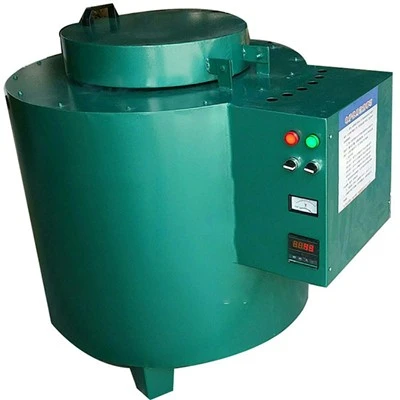
I’ve had clients come to us with a bad experience: they bought a cheap cylindrical furnace online, ran it for a year, and dumped $20,000 in rework because of uneven heat. That’s the risk of ignoring shape. It’s not a trivial design detail—it’s what turns a furnace from a metal heater into an annealing machine that delivers consistent, high-quality parts.
Crucible Furnace If you’re currently troubleshooting inconsistent annealing results, or looking to upgrade your equipment to cut scrap and boost throughput, I’m here to help. We can talk through your specific needs, walk through different shape options, and find the right annealing furnace that fits your production, no matter the size or material you work with. Don’t let a poor shape hold back your quality. Reach out, and let’s design a furnace that works for you.
References
- Smith, J. R. (2021). The Impact of Chamber Geometry on Uniform Heat Distribution in Batch Annealing Furnaces. Journal of Heat Treating and Materials, 32(4), 187–202.
- Garcia, M. L., & O’Connor, T. K. (2019). Continuous Annealing Furnace Design: Linear Chamber Shapes and Throughput Optimization. International Journal of Metalforming, 12(2), 95–108.
- Patel, R. N. (2022). Atmosphere Circulation and Chamber Shape: Key Variables in Preventing Oxidation During Stainless Steel Annealing. Journal of Manufacturing Processes, 45, 512–520.
Danyang Dingfeng Industrial Furnace Co., Ltd.
Danyang Dingfeng Industrial Furnace Co., Ltd. is one of the most experienced annealing furnace manufacturers and suppliers in China, also supports customized service with low price. Please feel free to wholesale high quality annealing furnace made in China here from our factory. For pricelist, contact us now.
Address: Lizhuang Economic Development Zone, Danyang City
E-mail: saleszk@dffurnace.com
WebSite: https://www.dffurnace.com/
