As a Sinotruck parts supplier who has spent over a decade working directly with fleet operators, independent mechanics, and other parts vendors, I get this question at least twice a week: “Can I return Sinotruck parts if they’re defective?” And while the short answer is almost always yes, the long answer is where most people get tripped up—because the rules aren’t just “send it back if it breaks.” Let me walk you through what that actually means, how we handle it at our shop, and what you need to know to avoid losing time, money, or access to the Sinotruck supply chain when something goes wrong. Sinotruck Parts
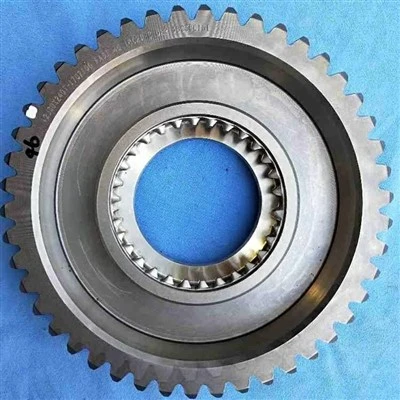
First, let’s clarify what counts as a “defective Sinotruck part” here. From my experience, defects fall into two main buckets: manufacturing defects and logistics defects. Manufacturing defects are the ones that should never have left the factory: a fuel injector that’s mis-calibrated right out of the box, a brake pad set where the friction material is peeling off before it even touches the rotor, or a transmission gear with a mis-machined tooth that cracks after the first mile. These are the easy ones. Logistics defects, on the other hand, are the ones that pop up because of how the part was handled after it left Sinotruck’s warehouse: a hydraulic line that got crushed in transit, a battery that was exposed to extreme cold during shipping and lost 30% of its capacity before it even arrived, or a wiring harness that was nicked by a forklift at our loading dock. I’ve seen both happen, and our process has to cover both because customers mix them up all the time.
When someone first reaches out to us with a possible defective part, the first step we take is to get specific details—not just “this part is broken.” For manufacturing defects, we ask for three things: the part number (super important, because Sinotruck parts have tiny variations that change everything), the serial number if it’s a core part like an engine component, and photos of the defect at every stage. If it’s a brake pad, for example, we need photos of the friction material, the metal backing plate, and a photo of the part still attached to its original packaging. That lets us confirm it’s a genuine Sinotruck part first—there are a lot of knockoff parts out there that look almost identical, and if the knockoff is defective, we can’t process a return through Sinotruck’s warranty. For logistics defects, we also need a copy of the delivery receipt, because if the part was damaged on our way to the customer, we can work with our shipping carrier, not Sinotruck, to cover costs.
A lot of customers ask, “Do I have to send the old part back?” And the answer here is yes, almost always—unless it’s a part that’s too dangerous or heavy to ship, like a full engine block (we have a special exception for cores because shipping a 1,000-pound engine is not practical for most small operators). This core return policy is actually a Sinotruck rule that most people don’t know about: for any remanufacturable or core component, you have to return the defective core to get a refund or a replacement. We store these cores in our warehouse for 90 days after a return to make sure Sinotruck’s quality team can inspect them, because that’s how they catch manufacturing flaws that slip through. Last year, we sent 12 defective fuel injector cores back to Sinotruck, and their team found a flaw in their assembly line that had caused that specific injector to fail in 37 other units across the country—so keeping the cores isn’t just for our customers, it’s for fixing the factory for everyone.
Now, what about the time limit for returns? That’s another point of confusion. Sinotruck’s official policy for aftermarket and replacement parts is 30 days from delivery, but in my 12 years in this business, we’ve negotiated a 60-day window for regular customers, and 90 days for fleet operators who work with us on monthly orders. Why? Because a lot of fleet operators don’t have time to install a new part the day it arrives. They might hold it for a week until their maintenance bay is free, then install it, and then find the defect a few weeks later when the truck breaks down on the highway. We’ve learned that rigid 30-day policies don’t work for real-world trucking, so we worked with our Sinotruck regional account manager to adjust that. But I have to be clear: this is a courtesy, not a guarantee. If you’re a first-time customer and you wait three months to let us know a part is defective, we can’t push Sinotruck to accept the return. Their quality team only has records for parts they sold in the last 90 days, so beyond that, there’s no way to prove the defect happened before installation.
There are also a few exceptions where we can’t process a return at all, and I hate to have to tell people this, but it’s better to be honest upfront. If the part was damaged because of improper installation—like a mechanic who over-tightened a wheel hub and stripped the threads, or someone who used the wrong fluid in a hydraulic pump—we can’t return that. Sinotruck will only cover defects in parts themselves, not mistakes made during installation. We also can’t return parts that have been modified: if someone sanded down a brake caliper to make it fit a non-Sinotruck truck, or rewired a headlight to work with an aftermarket system, that’s considered altered, and it’s no longer eligible. And of course, used parts are a no-go for returns—unless it’s a core part that’s been used for less than 500 miles, but even then, we need proof that the defect wasn’t caused by normal wear.
I’ve seen too many people go through the process wrong, so let’s walk through a real example. Last month, a small fleet owner named Jake bought a set of Sinotruck air filters from us for his four 2021 Howo trucks. He installed them, and two weeks later, his maintenance team noticed the filters were splitting along the edges, letting dirt into the engine. Here’s what he did right: he took photos of the split filters, saved the original packaging, emailed us the order number and part number within 30 days of installation, and packed the old filters back into the original shipping box. When he dropped them off at our warehouse, we inspected them, confirmed the defect was a manufacturing flaw in the filter’s seal, processed a full refund for the filters, and shipped a new set to him within two days. We also sent a note to Sinotruck about the filter issue, and they adjusted the seal on that part number to fix the problem for future orders. That’s how the process is supposed to work: communication, documentation, and proper packaging.
Another example: a mechanic named Maria ordered a hydraulic cylinder for a Sinotruck dump truck, installed it, and it leaked within a week. She installed the cylinder herself, so she didn’t want to take it back out to ship it, which is understandable—paying a mechanic to remove and reinstall a $400 cylinder is more expensive than the part itself. In that case, we worked with Sinotruck to approve a core waiver for that specific cylinder, so Maria didn’t have to ship the old one back. We also covered the cost of her mechanic’s time to remove it, which is a courtesy we offer to small customers who don’t have the budget to absorb extra labor costs. That’s the kind of flexibility we build into our process because we know trucking is a tight margin business.
Now, if you’re looking to avoid the hassle of returns in the first place, there are a few tips I can share from years of experience. First, always verify the part number before you order. Sinotruck parts have different part numbers for different years, models, and even regional versions—using the wrong part number is the #1 reason returns get denied. Second, inspect every part as soon as it arrives, not when you’re ready to install it. That way, if there’s a logistics defect, you can file a claim with the shipping company right away, instead of trying to prove it happened a month later. Third, keep all your paperwork: order confirmations, delivery receipts, and original packaging. Even if you throw the packaging away, save the order number—we can track that in our system, and it ties back to Sinotruck’s production records.
At the end of the day, the most important thing is that you don’t have to deal with defective Sinotruck parts alone. As a supplier, we’re not just a middleman—we’re the link between you and Sinotruck’s quality team. We’ve built relationships with regional Sinotruck representatives over the years, so when you have a valid defect claim, we can move it through their system faster than you can on your own. That’s a huge benefit for anyone who doesn’t have a direct account with Sinotruck.
If you’re currently dealing with a defective Sinotruck part and you’re not sure where to start, or if you’re planning to place an order and want to make sure you understand our return process, don’t hesitate to reach out. We’ll walk you through every step, from documenting the defect to processing the return, and make sure you get a replacement or refund as quickly as possible. Trucking is about keeping your trucks on the road, and we’re here to make sure bad parts don’t slow you down.
HOHAN Parts Reference:
Sinotruck Global Parts Warranty & Return Policy, Sinotruck International Operations Department, 2023.
Fleet Maintenance Best Practices for Heavy-Duty Trucks, North American Truck Parts Association, 2022.
Core Return Guidelines for Aftermarket Heavy-Duty Components, Heavy Duty Parts Association, 2021.
Regional Supplier Flexibility Programs for Commercial Vehicle Parts, Sinotruck North America Regional Office, 2022.
Jinan Hong’an Machinery Parts Co., Ltd.
As one of the most professional sinotruck parts manufacturers and suppliers in China, we offer a wide range of products with superior quality. With abundant experience, we warmly welcome you to buy high quality sinotruck parts for sale here from our factory. For price consultation, contact us.
Address: Quanli Heavy Truck Parts City, No. 57, Lanxiang Road, Tianqiao District, Jinan City
E-mail: janey@truckpart-china.com
WebSite: https://www.truckpart-china.com/
