As a seasoned supplier in the realm of oil conservators for transformers, I’ve witnessed firsthand the critical role that accurate oil level measurement plays in the reliable operation of these essential electrical assets. In this blog, I’ll share in-depth insights into the various methods, technologies, and best practices for measuring the oil level accurately in a transformer’s oil conservator. Oil Conservator In Transformer

Understanding the Importance of Accurate Oil Level Measurement
Transformers are the heart of electrical power systems, and the proper functioning of their oil conservators is vital for their longevity and performance. The oil in a transformer serves multiple purposes: it acts as an insulator, a coolant, and helps to prevent the oxidation of internal components. An incorrect oil level can lead to a host of problems, including reduced insulation performance, overheating, and potential damage to the transformer windings.
When the oil level is too low, the exposed windings may not be properly insulated, increasing the risk of electrical breakdown. On the other hand, an overfilled oil conservator can cause oil to spill out, leading to environmental hazards and potential fire risks. Therefore, accurate oil level measurement is not just a matter of operational efficiency; it’s a critical safety concern.
Traditional Methods of Oil Level Measurement
Visual Inspection
One of the oldest and simplest methods of measuring the oil level in a transformer’s oil conservator is visual inspection. This involves using a sight glass installed on the conservator tank. The sight glass is usually a transparent tube or window that allows the operator to observe the oil level directly.
Advantages:
- It is a low – cost and straightforward method.
- No additional power source is required for measurement.
Disadvantages:
- It can be difficult to obtain an accurate reading, especially if the sight glass is dirty or has condensation on it.
- Visual inspection is subjective and may vary depending on the observer’s angle of view.
- It is not suitable for remote monitoring, as it requires a physical presence near the transformer.
Float – Type Gauges
Float – type gauges are another common traditional method. These gauges use a float that is buoyant in the oil. The position of the float is mechanically linked to a pointer or a scale outside the conservator. As the oil level rises or falls, the float moves, and the pointer indicates the corresponding oil level.
Advantages:
- They are relatively simple and reliable.
- They do not require an external power source for basic operation.
Disadvantages:
- The mechanical components of the float – type gauge can wear out over time, leading to inaccurate readings.
- They may not be suitable for high – vibration environments, as the float can be affected by the movement.
- Calibration can be challenging, and the accuracy may degrade over long – term use.
Modern Technologies for Accurate Oil Level Measurement
Ultrasonic Sensors
Ultrasonic sensors have become increasingly popular for measuring the oil level in transformer oil conservators. These sensors work by emitting ultrasonic waves towards the oil surface. The waves bounce off the oil surface and return to the sensor. By measuring the time it takes for the waves to travel to the surface and back, the sensor can calculate the distance to the oil surface and thus determine the oil level.
Advantages:
- High accuracy, typically within a few millimeters.
- Non – contact measurement, which means there is no risk of contamination or damage to the sensor from the oil.
- Can be used for remote monitoring, as the sensor can be connected to a data acquisition system.
Disadvantages:
- The performance can be affected by factors such as temperature variations, the presence of foam on the oil surface, and the geometry of the conservator tank.
- They are relatively more expensive than traditional methods.
Capacitance Sensors
Capacitance sensors operate based on the principle that the capacitance between two electrodes changes when the dielectric medium between them changes. In the case of an oil conservator, the oil and air have different dielectric constants. The sensor consists of two electrodes, and as the oil level rises or falls, the capacitance between the electrodes changes proportionally. This change in capacitance is then converted into an oil level reading.
Advantages:
- High sensitivity and accuracy.
- Can be used in a variety of tank geometries.
- Long – term stability and reliability.
Disadvantages:
- Installation can be complex, as the electrode positioning needs to be carefully calibrated.
- They may require periodic calibration to ensure accurate readings over time.
Optical Sensors
Optical sensors use light to measure the oil level. These sensors can work in different ways, such as using the refraction or absorption of light by the oil. For example, some optical sensors emit a beam of light into the oil, and the amount of light reflected back to the sensor changes depending on the oil level.
Advantages:
- High precision and fast response times.
- Non – invasive and can be used in hazardous environments.
- Can provide real – time data for continuous monitoring.
Disadvantages:
- They can be affected by factors such as dirt or oil contamination on the optical components.
- The initial cost of installation can be high.
Best Practices for Accurate Oil Level Measurement
Regular Calibration
Regardless of the measurement method used, regular calibration is essential. Calibration ensures that the measurement device is providing accurate and reliable readings. It is recommended to calibrate the oil level measurement device at least once a year or as per the manufacturer’s recommendations.
Environmental Considerations
The environment in which the transformer operates can have a significant impact on the accuracy of oil level measurement. Factors such as temperature, humidity, and vibration should be taken into account. For example, temperature changes can cause the oil to expand or contract, affecting the oil level reading. Therefore, it is important to use sensors that can compensate for temperature variations.
Maintenance and Inspection
Regular maintenance and inspection of the oil level measurement equipment are crucial. This includes cleaning the sight glass (if visual inspection is used), checking the mechanical components of float – type gauges, and ensuring that the optical or ultrasonic sensors are free from dirt and damage. Any signs of wear or malfunction should be addressed promptly.
Integration with Monitoring Systems
To enhance the monitoring capabilities, it is advisable to integrate the oil level measurement device with a comprehensive transformer monitoring system. This allows for real – time data collection, analysis, and alarm notification in case of abnormal oil levels. Remote monitoring also enables timely decision – making and reduces the need for frequent on – site inspections.
Conclusion
Accurate oil level measurement in a transformer’s oil conservator is a critical aspect of transformer operation and maintenance. While traditional methods such as visual inspection and float – type gauges have their place, modern technologies like ultrasonic, capacitance, and optical sensors offer higher accuracy, reliability, and the ability for remote monitoring.
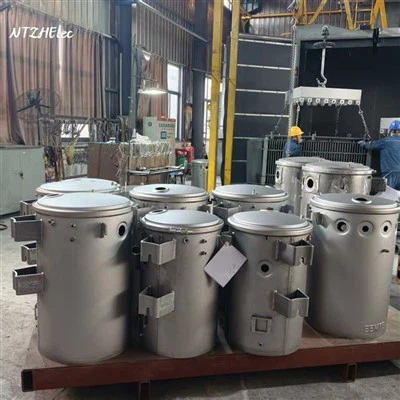
By following best practices such as regular calibration, considering environmental factors, performing routine maintenance, and integrating with monitoring systems, operators can ensure that their transformers are operating at optimal levels and minimize the risk of failures.
Transformer Radiator If you’re in the market for high – quality oil conservators for transformers and need reliable solutions for accurate oil level measurement, I encourage you to reach out to us. Our team of experts can provide you with in – depth product information, customize solutions to meet your specific requirements, and assist you in making the right choices for your electrical infrastructure. Let’s start a conversation about how we can help you optimize your transformer performance.
References
- Electrical Transformer Engineering Handbook, Third Edition, by Theodore Wildi
- Handbook of Transformer Technology: Design, Technology, and Diagnostics, by George Chen and Surya Santoso
- IEEE Standard for Liquid – Immersed Distribution, Power, and Regulating Transformers (IEEE C57.12.00)
- IEC 60076 – 1: Power transformers – General
Nantong Zhihe Electric Co., Ltd.
As one of the most professional oil conservator in transformer manufacturers and suppliers in China, we’re featured by quality products and low price. Please rest assured to wholesale cheap oil conservator in transformer made in China here from our factory. Customized orders are welcome.
Address: NO.202 Jianghai West Road, Hai’an Town, Hai’an City, Jiangsu Province
E-mail: colt.ntzh@gmail.com
WebSite: https://www.ntzhelectric.com/
