Hey everyone, Industrial Chemicals
If you’ve ever dabbled in the industrial side of things—whether you’re a plant manager, a production lead, or someone just trying to wrap your head behind what makes manufacturing tick—you’ve probably heard the terms “organic industrial chemicals” and “inorganic industrial chemicals” thrown around a lot. As someone who’s been in the industrial chemicals supply game for almost 12 years now, I get it—these terms can sound like total jargon at first, and mixing them up can lead to messy (and costly) headaches down the line. I’ve seen it happen way too many times: a customer orders the wrong chemical for their metal finishing line and ends up with a batch of parts that don’t pass quality control, or they overspend on an organic chemical when an inorganic one would’ve worked just as well. So today, I’m breaking down the real, no-BS differences between these two big categories, and why it matters for your operations.
First off, let’s cut through the confusion with the most basic, science-backed core difference: the carbon atom. Organic industrial chemicals are, at their most simple, chemicals that have carbon-hydrogen (C-H) bonds as their backbone. That’s it. Inorganic ones? They don’t have that C-H structure at all—their building blocks are usually metals, minerals, gases like oxygen or nitrogen, or other elements that aren’t tied up in carbon-hydrogen chains. But before you go thinking “organic = natural” and “inorganic = synthetic,” let’s pump the brakes. A lot of people get tripped up here because of the organic food trend, but in industrial chemistry, that rule doesn’t apply. Some organic industrial chemicals are made from crude oil (definitely not natural, at least not in the “whole food” sense), and some inorganic ones are mined straight from the ground—like sodium chloride, which you probably know as table salt, and it’s super common in industrial water treatment.
Let’s get into the nitty-gritty of where each one comes from, because that’s a big part of how you’d source them as a supplier. Organic industrial chemicals are usually derived from fossil fuels: crude oil, natural gas, or coal. When we refine oil, we crack those big, complex hydrocarbon chains into smaller molecules—things like methanol, ethanol, toluene, and xylene. These are workhorses for a ton of industries: ethanol is used to make pharmaceuticals and cleaning products, toluene is a solvent in paint and adhesives, and xylene is key for making plastics and polyester fabrics. Lately, we’ve been seeing a push for bio-based organic industrial chemicals too—made from corn, sugarcane, or even waste plant material—but they still fit the organic bill because they have that C-H backbone. The downside of most organic chemicals? They tend to be more volatile, flammable, and reactive, which means you’ve got to handle them with extra care on your facility floor. I always tell our customers to store organic solvents in cool, dry areas away from sparks, because one wrong move and you’ve got a fire hazard.
Inorganic industrial chemicals, on the other hand, come from way more basic sources: mines, quarries, and even atmospheric gases. Think sulfuric acid (one of the most produced chemicals in the world, used in fertilizer and battery manufacturing), sodium hydroxide (lye, used in soap and water treatment), ammonia (for fertilizers and refrigeration), and metal salts like iron chloride for water purification. These are usually simpler, smaller molecules—no long carbon chains here. Inorganics also tend to be more stable, less flammable, and often cheaper to produce than their organic counterparts, which makes them go-to for bulk industrial applications. I remember a customer a few years back who was using an expensive organic solvent to clean metal parts, and we showed them that a sodium hydroxide solution would do the exact same job for a fraction of the cost—they saved over $40k a year just by switching, no loss in quality. That’s the kind of win we live for as a supplier, right?
Now, let’s talk about how they behave in industrial processes, because that’s what really matters for your end use. Organic industrial chemicals have super versatile molecular structures, so you can tweak their properties a lot to fit specific needs. For example, you can adjust the chain length of a hydrocarbon to make a solvent that’s fast-evaporating for spray paints, or slower-drying for construction adhesives. That versatility makes organics indispensable for things like polymer production, specialty coatings, and pharmaceutical intermediates—where you need that exact, customized chemical makeup. But that same versatility can be a downside: organics can break down (or degrade) faster under certain conditions, which might not be what you want in a product that needs to last 10 years, like a plastic pipe. Also, when organic chemicals react, they often produce more byproducts, some of which are volatile organic compounds (VOCs) that can be bad for air quality—so you’ve got to factor in emissions controls if you’re using them.
Inorganic industrial chemicals, by contrast, have more predictable, rigid properties. Their simple molecular structure means they’re less likely to break down unexpectedly, which is why they’re used in applications where consistency is key—like metal plating, where you need a steady supply of zinc or nickel salts to get a uniform finish on parts, or in cement manufacturing, where calcium compounds are non-negotiable. Inorganics also tend to be better at things like catalysis (speeding up chemical reactions) because of their metal or mineral composition—for example, titanium dioxide (an inorganic compound) is used as a catalyst in making plastics and as a pigment in paint. The flip side? They’re way less versatile for custom jobs. If you need a solvent that dissolves a specific type of plastic, an inorganic chemical probably won’t cut it—you’ll need an organic one with the right molecular polarity. Also, some inorganics are corrosive—like that sulfuric acid I mentioned earlier, which will eat through metal pipes if you don’t line them properly. I always make sure our customers get the right storage and handling guidelines when we ship corrosive inorganics because safety is non-negotiable.
Another big difference is environmental impact, which is top of mind for almost every industrial operation these days. Organic industrial chemicals, especially the ones made from fossil fuels, tend to have a higher carbon footprint because they come from non-renewable resources, and their production involves a lot of energy to crack those complex hydrocarbon chains. Also, some organic solvents are persistent in the environment—meaning they don’t break down easily, and they can contaminate soil or water if they leak. But like I mentioned earlier, bio-based organics are changing that—they’re renewable, have a lower carbon footprint, and some are even biodegradable, which is a huge plus for companies trying to hit sustainability goals.
Inorganic industrial chemicals, while often mined (which can have its own environmental impacts, like habitat disruption from mining), tend to be more stable and less likely to leach into the environment if handled properly. Wait, but don’t get me wrong—some inorganics are super toxic, like lead compounds or mercury salts, so you’ve still got to dispose of them correctly. But because they don’t have that carbon backbone, they don’t contribute to VOC emissions the way many organic chemicals do, which is a win for air quality. I’ve worked with a lot of food and beverage manufacturers lately who prioritize inorganics for their processing lines because they’re easier to regulate for food safety—no weird carbon-based byproducts that could contaminate their products.
Let’s put this into real-world examples so you can see how it plays out on the job site. If you’re a manufacturer of car parts needing to strip paint from raw metal, you’d reach for an inorganic chemical like sodium hydroxide (lye) because it’s cheap, fast-acting, and stable—way better than an organic solvent that might be more expensive and catch fire. But if you’re making flexible plastic wrap for food, you’d need an organic chemical like polyethylene (made from ethylene, an organic feedstock) because that’s the only way to get that stretchy, clear plastic film that keeps food fresh. Another example: a wastewater treatment plant uses inorganic iron chloride to bind to heavy metals in the water and make them settle out, which is a standard, cost-effective process. A pharmaceutical company, though, would use organic intermediates to make active ingredients because those molecules need to be precise and match the exact structure required to work in the human body.
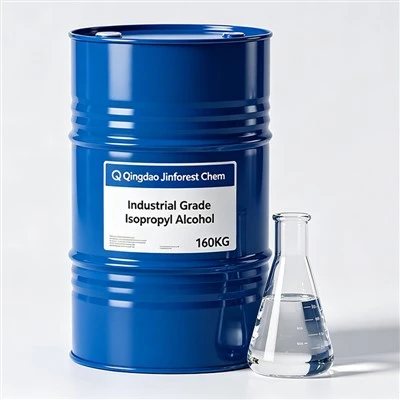
As a supplier, my job isn’t just to send you a drum of chemical and call it a day. It’s to help you pick the right one for your specific application, and that means understanding both organic and inorganic chemicals inside and out. I’ve had customers come to me thinking they need a fancy organic chemical for their project, only to realize a cheaper inorganic one would do the job better, or vice versa. Last quarter, a small electronics company reached out to me panicking because their supplier sent them the wrong organic solvent for cleaning circuit boards—they were getting residue on the boards that was ruining their products. We swapped it for an inorganic isopropyl alcohol solution (wait, isopropyl alcohol is technically organic, but it’s a simpler one) that cut their defect rate by 35% and saved them over $20k in rework costs. That’s the kind of difference knowing these distinctions can make.
If you’re reading this and you’re not sure which chemical is right for your operation—whether you’re dealing with metal finishing, water treatment, pharmaceuticals, plastics, or any other industrial process—don’t guess. Don’t waste time and money on the wrong product. Reach out to our team to talk through your needs. We’re not just a supplier; we’re a group of chemists and industrial experts who’ve been in the game for years, and we can help you pick the perfect chemical, whether it’s organic or inorganic, to keep your operations running smoothly, safely, and cost-effectively.
Just to wrap this up so there’s no confusion: the big takeaways are:
- Core difference: Organic = C-H bonds, inorganic = no C-H bonds
- Sources: Organics from fossil fuels or bio-based feedstocks; inorganics from mines, minerals, gases
- Properties: Organics are versatile, often flammable/volatile; inorganics are stable, often cheaper, less flammable
- Use cases: Organics for custom polymers, solvents, pharma intermediates; inorganics for bulk industrial processes, water treatment, metal finishing
At the end of the day, it’s not about which is “better” — it’s about which is right for your specific needs. I’ve seen both save and ruin operations, so don’t leave it to chance. Hit us up to connect with our team and get the right chemical solution for your next project. You won’t regret it.
Alcohols References
- Ullmann’s Encyclopedia of Industrial Chemistry, 7th Edition, Wiley-VCH, 2018.
- Kirk-Othmer Encyclopedia of Chemical Technology, 5th Edition, John Wiley & Sons, 2004.
- Centers for Disease Control and Prevention (CDC), “Chemical Safety: Organic vs. Inorganic Compounds”, 2021.
- World Health Organization (WHO), “Industrial Chemicals: Organic and Inorganic”, 2019.
- American Chemistry Council, “2023 Global Chemical Production Report”, 2023.
Qingdao Jinforest Chem Tech Co., Ltd.
Qingdao Jinforest Chem Tech Co., Ltd. is one of the most professional industrial chemicals manufacturers and suppliers in China. With abundant experience, we warmly welcome you to wholesale high quality industrial chemicals at competitive price from our factory. If you have any enquiry about quotation, please feel free to email us.
Address: Huangdao District, Qingdao City, Shandong Province (3002, Unit 1, Block B, No.226 Changjiang Middle Road, Former Development Zone)
E-mail: cecilia@kozorigin.com
WebSite: https://www.jinforestchem.com/
