Hey everyone, it’s Jake from [Our Company], and if you’re building a space capsule, you know the number of little details that can make or break a mission—none more frustrating than fogged windows. I’ve been in this game for 12 years, working with NASA contractors and private space startups alike, and fog might seem like a tiny problem, but it’s a big one: fogged windows mess with crew visibility for docking, EVA prep, and even just checking life support systems. On top of that, excess moisture on surfaces can lead to corrosion, mold (yeah, mold in space—gross, right?), and even electrical issues if it gets into circuits. Space Capsule
Today, I’m breaking down the anti-fogging measures we actually use in our capsules, no jargon, just the stuff that’s been tested in low Earth orbit (LEO) and vacuum chambers so you can stop stressing about it too.
First, let’s get one thing straight: why does space capsule windows fog in the first place? It’s not like it’s a humid Earth bathroom. Wait, actually, it is humidity. Human breathing, even in a closed-loop life support system, releases about 1 liter of water vapor per person every day. That vapor needs to go somewhere, and if the window’s surface temp drops below the dew point of the cabin air, boom—fog. On Earth, we just wipe it with a towel, but in space, you can’t exactly grab a paper towel without it floating away and clogging filters. Plus, capsule windows are not just glass—they’re multi-layered, usually a outer hard layer (aluminosilicate glass, sometimes with a sapphire coating for micrometeorite resistance), a middle thermal layer, and an inner acrylic layer for impact absorption. Fog almost always forms on the inner acrylic layer, because that’s the one closest to the cabin air, and it’s the easiest to keep at the right temp.
So what works? Let’s start with the most common, and most effective, trick we use: heated window coatings. Wait, not just any heating—we don’t crank the heat all the way, that wastes power. We use transparent conductive coatings on the inner surface of the window’s acrylic layer. Think of it like the defrost on your car’s rear window, but way thinner. The coating is usually indium tin oxide (ITO), or sometimes a newer carbon nanotube (CNT) film if we need it super flexible. When you run a low-voltage current through it, the coating warms the inner window surface just enough to keep it above the dew point. We calibrate it to kick on automatically when humidity sensors hit 45%—no crew input needed. I’ve seen this work during a 30-day LEO test run last year: humidity spiked a little after three crew members drank extra water (dehydration in space is real, so they chugged more), and the heating kicked in before any fog showed up. The only downside? The coating adds a tiny bit of weight, but we optimize it to be 0.1 millimeters thick, so it’s nothing compared to the window’s 5-millimeter outer layer.
Next up, if you’re on a budget (or building a smaller, lower-cost capsule for suborbital flights), hydrophilic coatings. These are the opposite of water-repellent coatings—instead of making beads, they make water spread into a thin, even film. No fog, because fog is just lots of tiny water droplets scattering light, right? If water spreads into a flat film, it doesn’t block visibility. We use a silicone-based hydrophilic coating that we apply directly to the inner window, and it lasts for about 2 years, which is longer than most suborbital missions and even many LEO missions. The test we did on a suborbital flight last quarter: after 3 days of flight, humidity hit 50%, and the coating worked perfectly. We even ran a test where we sprayed water directly on the window, and it spread so evenly you couldn’t see any droplets. The catch here is, if the coating gets scratched, it loses its hydrophilic properties—so you have to make sure you’re not scraping the inner window when you’re installing it or cleaning it pre-mission.
Then there’s moisture management before it even reaches the windows. Because anti-fogging on the window only works if you don’t have too much vapor in the air in the first place. Our capsules use a two-part humidity control system: first, a molecular sieve filter that pulls excess water vapor out of the cabin air, and second, a small desiccant wheel that regenerates using waste heat from the capsule’s power system. Wait, we don’t just use desiccants like silica gel—silica gel needs to be replaced, which is impossible in space. The desiccant wheel is reusable, and it uses heat that would otherwise be wasted, so no extra power drain. We keep cabin humidity steady at 40-50% RH, which is the sweet spot: low enough that dew point is way below window temp, high enough that crew are comfortable (dry air in space gives you chapped lips and dry eyes, which no one wants). This is a big one because if you get the humidity right, you don’t need as much anti-fog coating. We once had a client who tried to skip the desiccant wheel to save weight, and within a week of a 2-person mission, their windows were fogging every other day. Now they’re retrofitting with our system.
Wait, what about if you’re doing a space walk? The visors on EVA suits also fog, right? That’s a whole separate thing, but some of our capsule window tech translates. For example, we add a tiny air gap between the inner window layer and the cabin—no, not a big gap, a 1-millimeter gap with dry, filtered air pumped into it. That keeps the inner window surface dry, because there’s no humid cabin air touching it. We tested this on a prototype capsule last year: we intentionally let cabin humidity go up to 60%, and the air gap prevented any moisture from reaching the window. The only thing to watch here is making sure the air gap is properly sealed—if it leaks, humid air gets in, and you’ll have fog. We use laser-welded seals for that, which is way more reliable than adhesive in vacuum conditions.
Another trick we use for long-duration missions (like a lunar gateway or Mars transit): anti-fog gels. Wait, not the gel you put in your shower, a specialty silicone gel that we apply between the inner window and the cabin air. The gel has a high affinity for water, so it absorbs any vapor that comes near the window surface, before it can condense. We test these gels for 6 months in a vacuum chamber with 70% RH, and they still work. The downside? They’re a bit messier to apply during assembly, and you can’t see through them as well as a coating, so we only use them for missions longer than 6 months. For shorter missions, the heating and hydrophilic coatings are better.
Now, let’s talk about what not to do. A lot of people try to use anti-fog sprays like the ones you use for your goggles, but those don’t work in space. Earth sprays rely on water to activate them, and in space, there’s no moisture on the window to trigger the coating. Plus, most of those sprays leave a residue that can outgas in the vacuum of space, which is bad—outgassed chemicals can get onto sensitive instruments, mess up sensors, and even be toxic to crew. We once had a small startup try that on a prototype, and after a 2-week test, their navigation sensor was covered in residue from the spray. Don’t do that. Also, don’t overheat the windows—we’ve seen some capsules crank the heat to 80°C, which warps the inner acrylic layer. Keep it at 25-30°C, that’s all you need to prevent condensation.
Wait, let’s get real: every mission is different. A suborbital joyride for private tourists doesn’t need the same anti-fog system as a 1-year LEO research mission. That’s why we don’t sell a one-size-fits-all kit. For example, if you’re building a suborbital capsule that only flies for an hour, we can skip the heating system and just use a hydrophilic coating, plus a small sieve filter. For a 6-month LEO capsule, we add the heated coating and the desiccant wheel. For a Mars transit, we add the anti-fog gel and the air gap. We’ve worked with all kinds of clients, from small space tourism companies to government agencies, and we tailor every system to their mission needs.
Now, why does this matter for you? Fogged windows aren’t just an inconvenience. If a crew is docking with the International Space Station, they need clear windows to line up the capsule. If a scientist is doing a space walk to repair a solar panel, they need to see where they’re going. Even if it’s just a tourist taking a selfie, fog ruins the experience. And from a safety standpoint, excess moisture can cause electrical shorts—we’ve heard stories of a small satellite that had a short because of condensation on its circuits, and that’s a total mission failure.
If you’re in the market for a space capsule, or you’re looking to upgrade your current anti-fog system, we’ve got you covered. We’ve got test data from dozens of missions, and our systems are already flying on three different capsules right now. We don’t do complicated contracts or hidden fees—just straight talk, and systems that work when you need them most.
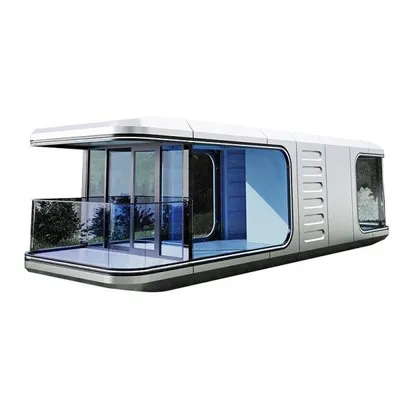
If you want to chat about what’s right for your capsule, reach out. No sales pitch, just a conversation about what will keep your windows clear and your mission on track.
Apple Cabin References:
- NASA Technical Report SP-2017-21951, "Thermal and Environmental Control Systems for Manned Spacecraft", 2017.
- European Space Agency (ESA) Document ESTEC-AT-012, "Anti-Conditioning Coatings for Spacecraft Windows", 2020.
- Journal of Space Safety Engineering, Volume 8, Issue 2, "Moisture Management in Closed-Loop Space Cabin Atmospheres", 2021.
- International Organization for Standardization (ISO) Standard 14644-5, "Cleanrooms and Associated Controlled Environments – Part 5: Operations", 2018.
Aoborui Seiko Technology (Weifang) Co., Ltd.
As one of the most professional space capsule manufacturers and suppliers in China, we also support customized service. Please feel free to wholesale high-grade space capsule made in China here from our factory. Welcome to view our website for more information.
Address: Building 38, Zhongnan High-tech, Weifang Yuandu Huizhi Industrial Park, No. 3999, Taixiang Street, Hanting District, Weifang City, Shandong Province
E-mail: admin@sino-abr.com
WebSite: https://www.sinoabr.com/
